
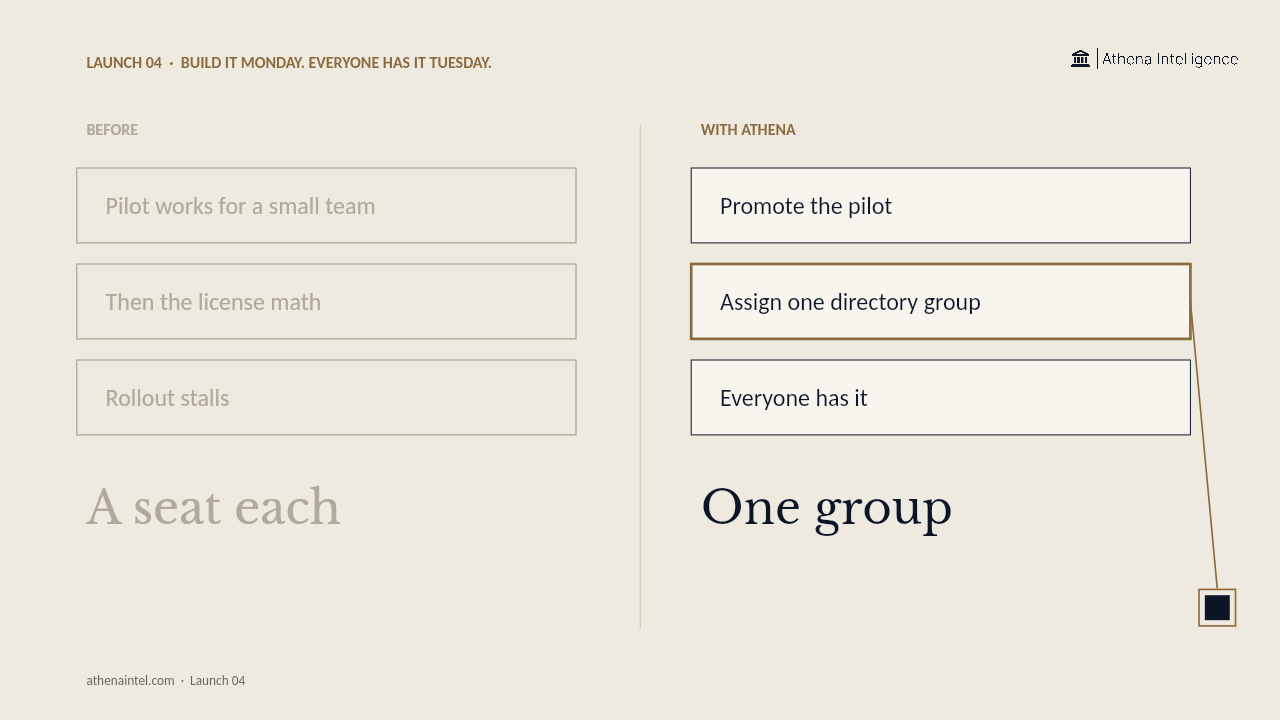
The pilot works. A small team built something useful with AI, and the people who tried it do not want to give it back.
Then someone opens the license spreadsheet. Rolling it out to everyone means buying a seat for everyone, and the rollout stalls in procurement.
Applications are how Athena fixes that.
How it works. You describe the tool you want. Athena builds it on a Computer, which is a private workspace where it can write code, use your data, and show you a live preview. When it looks right, you promote it to an Application.
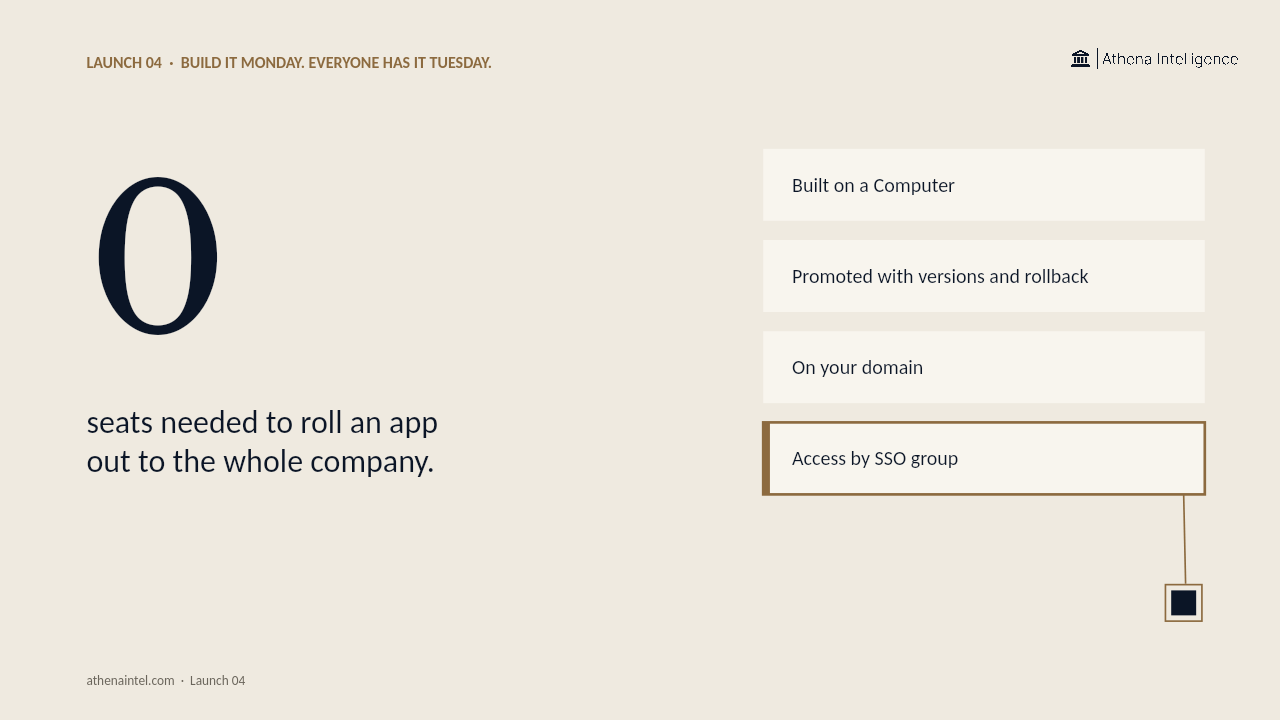
An Application has versions you can roll back, a test link you can send to a reviewer, and its own web address on your domain. You give access to a directory group, the same way you would give access to a shared folder. Everyone in the group can open it. Nobody needs their own license.
Everyone sees only what they are allowed to see. Inside the app, Athena works with the permissions of whoever is using it. It reads those permissions from your existing systems, so there is nothing new to maintain.
Clients too. If the audience is outside your company, the same app can be opened as a Portal: guests log in, see only their own space, upload what you asked for, and your reviewer decides.
Our own website runs this way. An agent maintains it, and every change is staged, reviewed, and promoted like any other Application.
This is not a drag-and-drop app builder. You describe what you want, Athena writes it, and someone reviews the code and the preview before it goes out. We think that is the right trade.
The many should not need a seat to use what the few built.
From pilot to ten thousand with one group
A small team built something useful with AI, and the people who tried it do not want to give it back. Then someone opens the license spreadsheet. Rolling it out to everyone means buying a seat for everyone, and the rollout stalls in procurement.
Applications are how Athena fixes that. You describe the tool you want. Athena builds it on a Computer, which is a private workspace where it can write code, use your data, and show you a live preview. When it looks right, you promote it to an Application.
An Application has versions you can roll back, a test link you can send to a reviewer, and its own web address on your domain. You give access to a directory group, the same way you would give access to a shared folder. Everyone in the group can open it. Nobody needs their own license.
Everyone sees only what they are allowed to see
Inside the app, Athena works with the permissions of whoever is using it. It reads those permissions from your existing systems, so there is nothing new to maintain. A key-account manager uploads six cross-referenced Excel files and gets one view. A wholesaler sees only its own rows. Same app, thousands of tenants.
If the audience is outside your company, the same app can be opened as a Portal: guests log in, see only their own space, upload what you asked for, and your reviewer decides. External clients use it without an Athena license. An audit team replaced a SharePoint-backed portal with one.
A Fortune 500 retailer rolled a white-labeled AI assistant to 10,000 employees by directory group, included in Athena services. The retailer removed a per-seat AI assistant from consideration with 500 prepaid licenses on the shelf and chose Athena instead.
Computer, Application, Portal: one lifecycle
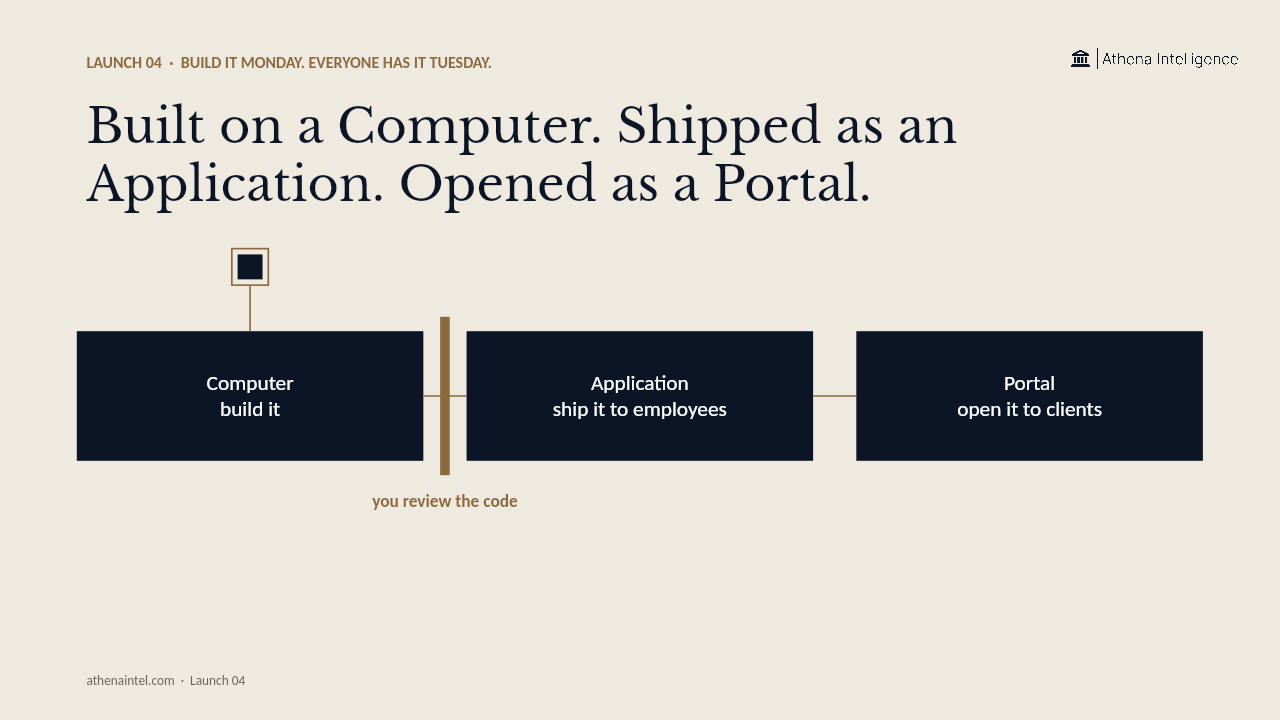
These are not three products. They are one thing at three stages. Built on a Computer. Shipped as an Application. Opened to clients as a Portal.
A Computer is where it is built. A sandboxed machine with files, code, a database, a browser, a web server. The builder and the agent work together. State is mutable; you can undo changes. When you promote it to an Application, each promotion is an immutable version. Staging gets its own URL you can send to a reviewer. Roll back in one action.
Your employees access it by SSO group. Included in Athena services. If the audience is outside your directory, you open it as a Portal. Guests authenticate through your identity provider or a secure link. Each guest sees only their own room. Uploads against a checklist, comments, read receipts, live matter or engagement status. Every change to this website is staged, reviewed, and promoted like any other Application.
What teams ship as Applications
A white-labeled AI assistant over email, documents, chat, and the data warehouse, provisioned by directory group, rolling to 10,000 employees at a Fortune 500 retailer. Saved runs and a proactive daily agenda make it sticky on day two.
A key-account manager uploads five or six cross-referenced Excel files and gets one view. Included in Athena services. Built for a beverage sales team. The Application won.
Wholesaler apps with row-level security. Each partner sees only its own rows. Same app, thousands of tenants. A finance lead at one customer built an FP&A tool by talking to the agent. Review still needs someone who can read a preview and, ideally, the code changes.