
Every company has one dashboard everybody opens on Monday morning and everybody complains about. It is slow to refresh, slow to filter, and every new viewer needs another license.
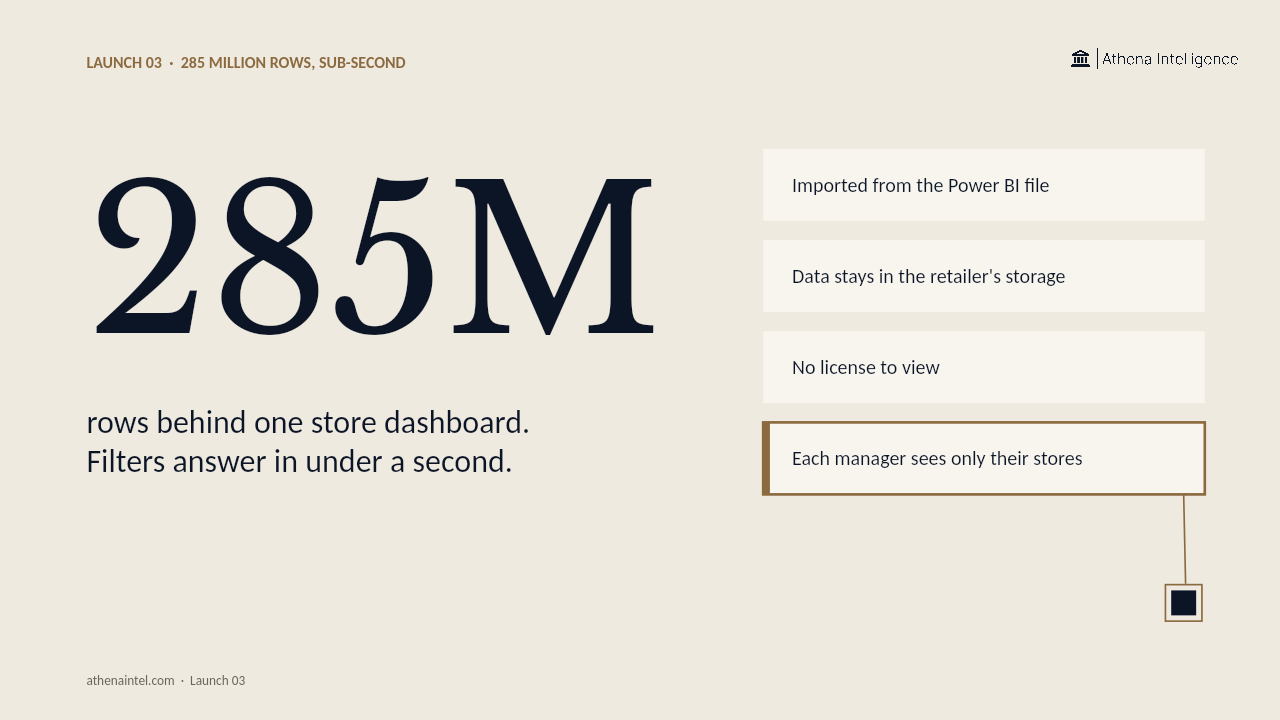
At a Fortune 500 retailer, that dashboard sat on a table with hundreds of millions of rows and took around four hours to refresh. Athena made it sub-second for thousands of store managers, included in Athena services.
Here is what we changed, and what we left alone.
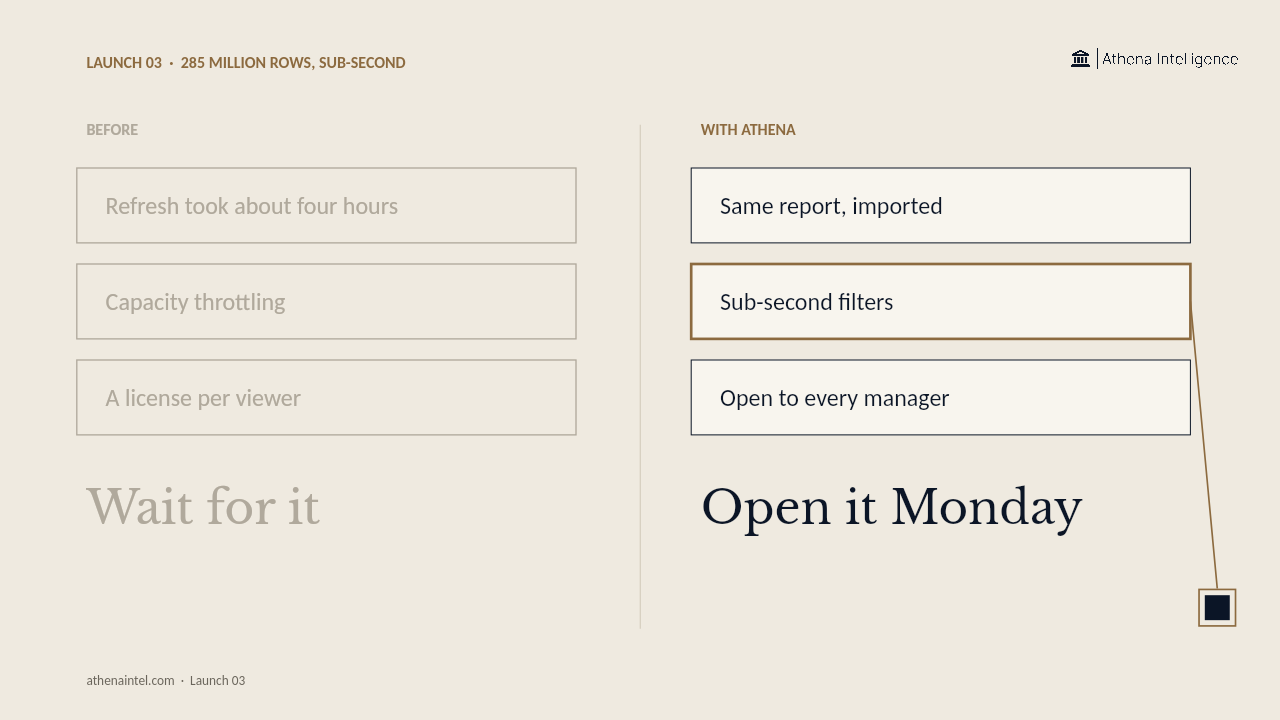
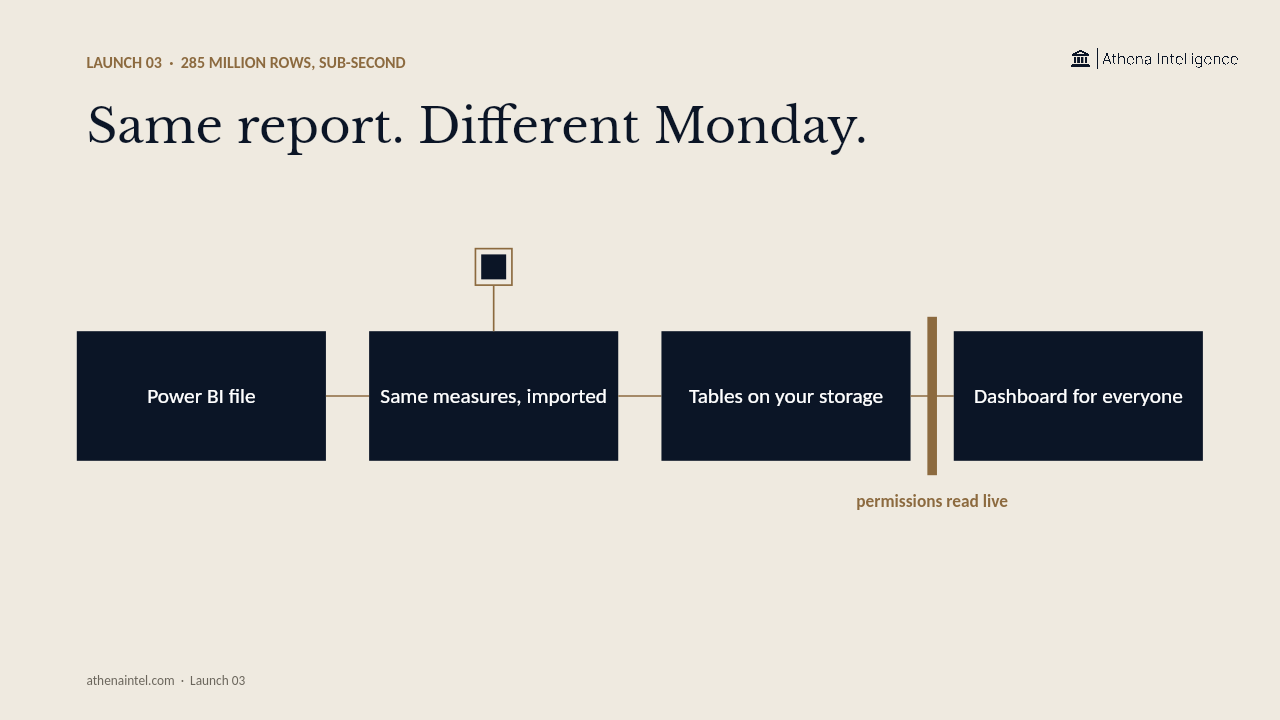
What stayed the same. The report. We imported the existing BI file, so the measures, filters, and layout came across as they were. The data stayed in the retailer's own storage. And each store manager still sees only their own stores, because Athena reads the existing permissions instead of creating a second set to maintain.
What changed. Filters now answer in under a second. And nobody needs a license to open it, so rolling it out to every store manager is an access decision, not a purchasing one.
You do not have to switch everything at once. Athena can read your existing BI setup, so current reports keep working while you move the slow ones first.
Why this matters beyond speed. Click any number and you can see where it came from. And the same definitions the dashboard uses are the ones Athena's agents use, so a question asked in chat gets the same answer the dashboard shows.
Unusual custom BI visuals do not always come across. Standard ones do, and the import tells you exactly which ones did not.
Same report. Different Monday.
Import the file, keep the report
The retailer's existing BI file—measures, filters, and layout—imported directly.
Athena imported the existing BI file—measures, filters, and layout—and rebuilt the dashboard on the Lakehouse. The report stayed exactly the same. The data stayed in the retailer's own storage. Filters now answer in under a second, and access is included in Athena services.
You drop the Report file. Athena recreates measures, relationships, and standard visuals. Anything that did not round-trip is listed once, so you can fix it and move on.
Permissions you already have
Each store manager still sees only their own stores. Athena reads the existing warehouse permissions instead of creating a second set to maintain. Viewers authenticate through SSO; access is included in Athena services.
The retailer rolled the dashboard out to thousands of store managers. Access is a business decision, not a purchasing one. The same infrastructure that answers one filter in under a second answers it for thousands of concurrent Monday users.
Data stays in the retailer's storage. Iceberg tables in their own object storage; an engine that returns 2 million-row scans in 79 milliseconds and billion-row questions in milliseconds of engine time.
Move the slow ones first
You do not have to switch everything at once. Athena can read your existing BI setup, so current reports keep working while you move the slow ones first. Athena reads the existing BI semantic model and runs its measures from the same surface.
Every chart answers 'why this number?' with the exact upstream table, transform, and freshness. The same definitions the dashboard uses are the ones Athena's agents use, so a question asked in chat gets the same answer the dashboard shows.
Click any number and you can see where it came from. Time-travel lets you compare a dashboard to itself as of last Monday, so you see what moved and why. Governance is built in: dashboards are assets with owner, versions, lineage, and citations.
Who it is for
This is for BI leads and heads of data who have one dashboard the business complains about every Monday. Capacity units get bought and rationed. Refreshes take hours. Throttling hits on a third of days. The people who need the number are the last to get it.
The result: sub-second cross-filter for thousands of Monday users. Athena reads the existing BI semantic model and runs its measures, so if you have real spend on BI, warehouse, or lakehouse tools, the path is: read the semantic layer today, rebuild the slowest dashboard this month, move the tables when it pays.
Publish as an Application. Provision by SSO group. A wholesaler app gives each partner only its rows. Distribution without seats. You consolidate platforms because it works, not because you planned a migration.